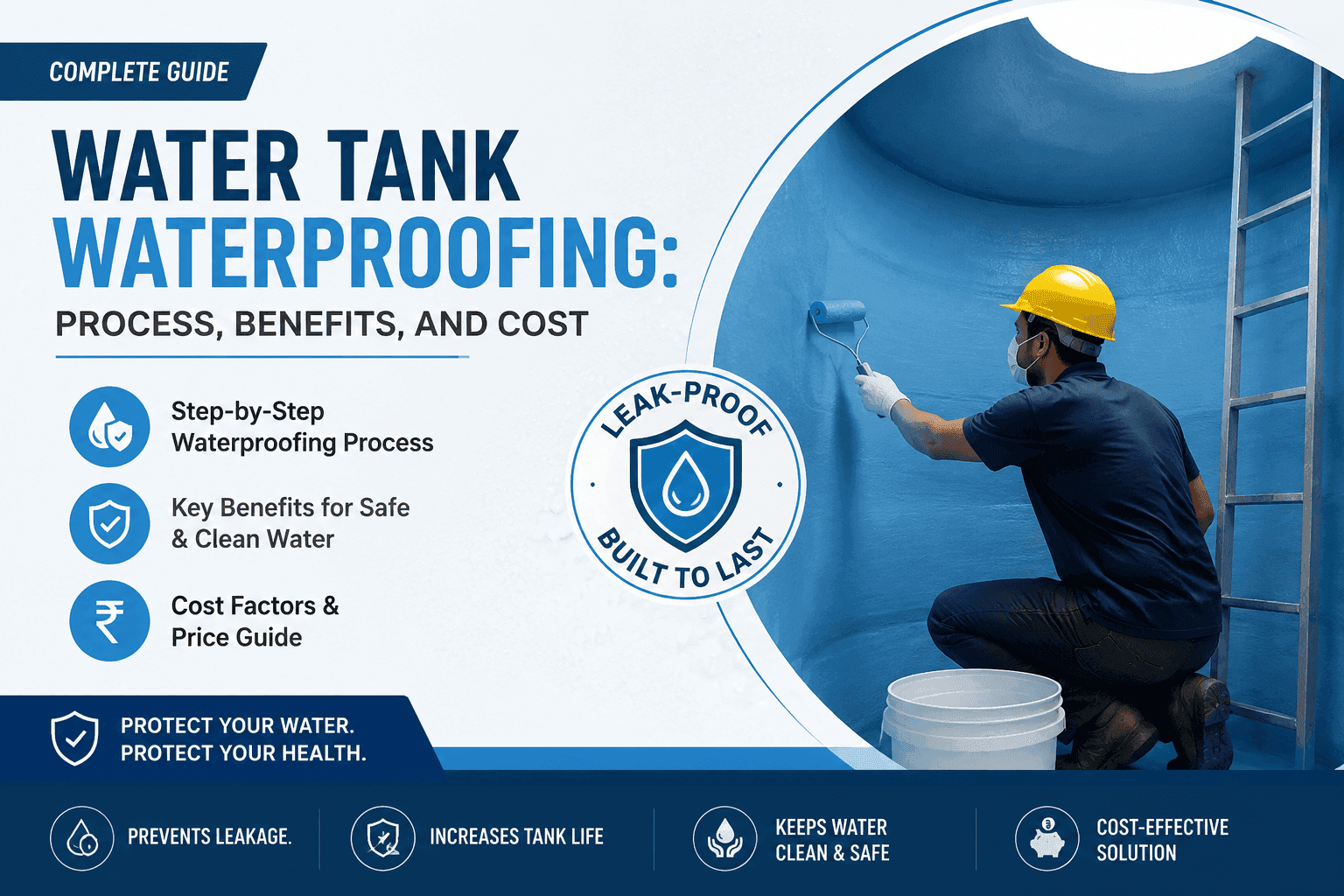
Water Tank Waterproofing: Process, Benefits, and Cost
Waterproofers Team
June 3, 2026
Discover how water tank waterproofing works, its benefits for hygiene and durability, and cost factors. Learn step-by-step processes, materials used, and why it’s essential to prevent leaks and water contamination.
If you’re reading this, you probably already know that water tanks are a behind-the-scenes hero for homes and businesses. But, the part most of us overlook? The importance of keeping them leak-free and safe. Enter water tank waterproofing—the unsung champion that keeps your water clean, your tank strong, and unnecessary repairs off your to-do list. Whether your tank is new, old, rooftop, or underground, understanding waterproofing will help you avoid future headaches and enjoy peace of mind.
Why Water Tank Waterproofing Matters
It’s easy to ignore a water tank—until something goes wrong. A leaking tank can quickly become a big issue, affecting everything from the water you drink to the health of your building walls. Here’s why waterproofing isn’t just recommended, but nearly essential:
Hygiene & Safety: Leaks allow bacteria and contaminants to sneak in, which can jeopardize drinking water quality.
Durability: Water damage eats away at concrete and steel, shortening your tank’s lifespan and leading to expensive repairs.
Think about it—would you store your drinking water in a container you know isn’t sealed? So, why risk it with your water tank?
The Waterproofing Process: How It’s Done
The waterproofing process for a water tank is precise but straightforward, especially with experienced waterproofers. It’s not a “paint and forget” situation; the methods and materials chosen matter a lot. Here’s what typically happens:
1. Inspection and Cleaning
Every good job starts with a clean slate. The tank is drained, scrubbed, and inspected for cracks or weak spots. The cleaner the surface, the better the waterproofing will stick.
2. Structural Repair
If there are cracks, they’re patched with repair mortar or epoxy fillers. Addressing these first prevents the waterproofing from being undermined down the line.
3. Applying Waterproofing Materials
This is where expertise counts. Modern water tank waterproofing uses a range of materials—from cementitious slurries to food-safe acrylic/polymer coatings. The material is applied in one or two coats, based on manufacturer and tank type.
4. Curing & Quality Check
After applying the chosen product, it’s time to let it cure (usually 24–72 hours). Once cured, the tank is checked again to make sure every joint and corner is protected before it’s filled back up. Quality waterproofers won’t skip this step because it’s the difference between “done” and “done right.”
Benefits of Water Tank Waterproofing
Is it really worth it to waterproof your water tank? Absolutely. Beyond the basics, here’s what you actually get:
Long-Term Cost Savings: Prevents expensive tank replacements and frequent repairs.
Consistent Water Quality: No more worrying about leaks letting in outside contaminants.
Low-Maintenance Future: With proper water tank maintenance and a waterproofed tank, cleaning and upkeep become much simpler.
Most people find the upfront waterproofing cost pays for itself in avoided hassles and repairs before too long.
Key Materials Used in Waterproofing Tanks
Not sure what’s actually going on your tank walls? Here are some commonly trusted materials and why they’re chosen:
Cementitious waterproofing compounds: Great for concrete tanks—strong, durable, and forms a tough barrier.
Acrylic and polymer-based coatings: Flexible and food-safe, perfect for all types of tanks and climates.
Epoxy coatings: For chemical resistance and ultra-strong protection (often in industrial settings).
Professional waterproofers choose materials based on your tank’s structure (concrete, plastic, steel) and, most importantly, the intended use—drinking water needs food-safe, non-toxic solutions.
Waterproofing Cost: What to Expect
Let’s break down the waterproofing cost angle. Prices can vary a lot based on:
Tank size (larger tanks = higher cost)
Material used (epoxies are pricier than basic cement)
Extent of repair needed beforehand
Labour costs in your region
For a medium-sized residential tank, you might spend anywhere from a couple of hundred to several hundred dollars. But for large or seriously damaged tanks, expect more. It’s important to get quotes from a few reputable waterproofers so you know you’re getting value, not just the lowest price.
Choosing the Right Waterproofer (and What to Look For)
When hiring, keep an eye out for:
Experience: Have they worked with your tank type before?
Quality Materials: Do they use food-safe, branded products?
Long-Term Warranties: Trustworthy companies stand by their work.
Ask for references and check reviews. Sometimes, the right waterproofer makes all the difference—not just in this job, but in the tank’s longevity.
Care Tips: Water Tank Maintenance After Waterproofing
A bit of care goes a long way in protecting your tank and the investment you’ve made. Here are a few tips to keep it in great shape:
Have your tank cleaned and inspected at least once a year.
Watch for early signs of leaks or water discoloration—catching issues early means simpler fixes.
And remember: delaying needed re-coating or repairs can undo all that good work, so keep up with regular water tank maintenance.
Ready for Leak-Free Living?
Water tank waterproofing isn’t just another home improvement checkmark—it’s an investment in your family’s health, your property’s value, and your future peace of mind. Whether you’re planning a new installation or need to fix up an old tank, choosing trusted waterproofers and understanding the waterproofing process will save time, stress, and money.
If you have questions or want a quote, reach out to a local expert—your water is worth it. Here’s to better tanks and cleaner water, one seal at a time!