How to Waterproof a Roof: Concrete & Rooftop Guide

Waterproofers Team
February 10, 2026
Roof waterproofing protects your home from leaks, dampness, and structural damage. This guide explains waterproofing methods, benefits, causes of roof leakage, and preventive tips for long-lasting protection.
All You Need to Know About Roof Waterproofing
Roof waterproofing is one of the most critical aspects of home maintenance, especially in regions that experience heavy rainfall and extreme temperatures. An unprotected roof can allow water to seep into the structure, causing dampness, cracks, mould growth, and long-term structural damage. Addressing roof waterproofing early helps protect not only the building but also the health and comfort of those living inside.
A leaking roof is more than an inconvenience it can damage ceilings, weaken concrete surfaces, and lead to expensive repairs. That’s why understanding roof waterproofing solutions and choosing the right treatment is essential for every homeowner.
What Is Roof Waterproofing?
Roof waterproofing is the process of applying protective materials or specialized coatings to a roof surface to prevent water penetration and moisture buildup. It creates a durable, weather-resistant barrier that shields the structure from leaks, dampness, cracks, and long-term deterioration caused by rain, humidity, and temperature fluctuations. Effective roof waterproofing not only protects the concrete and roofing layers but also prevents mould growth, improves indoor comfort, and extends the overall lifespan of the building. When applied correctly, it ensures long-term roof performance while reducing maintenance costs and safeguarding the structural integrity of the property.
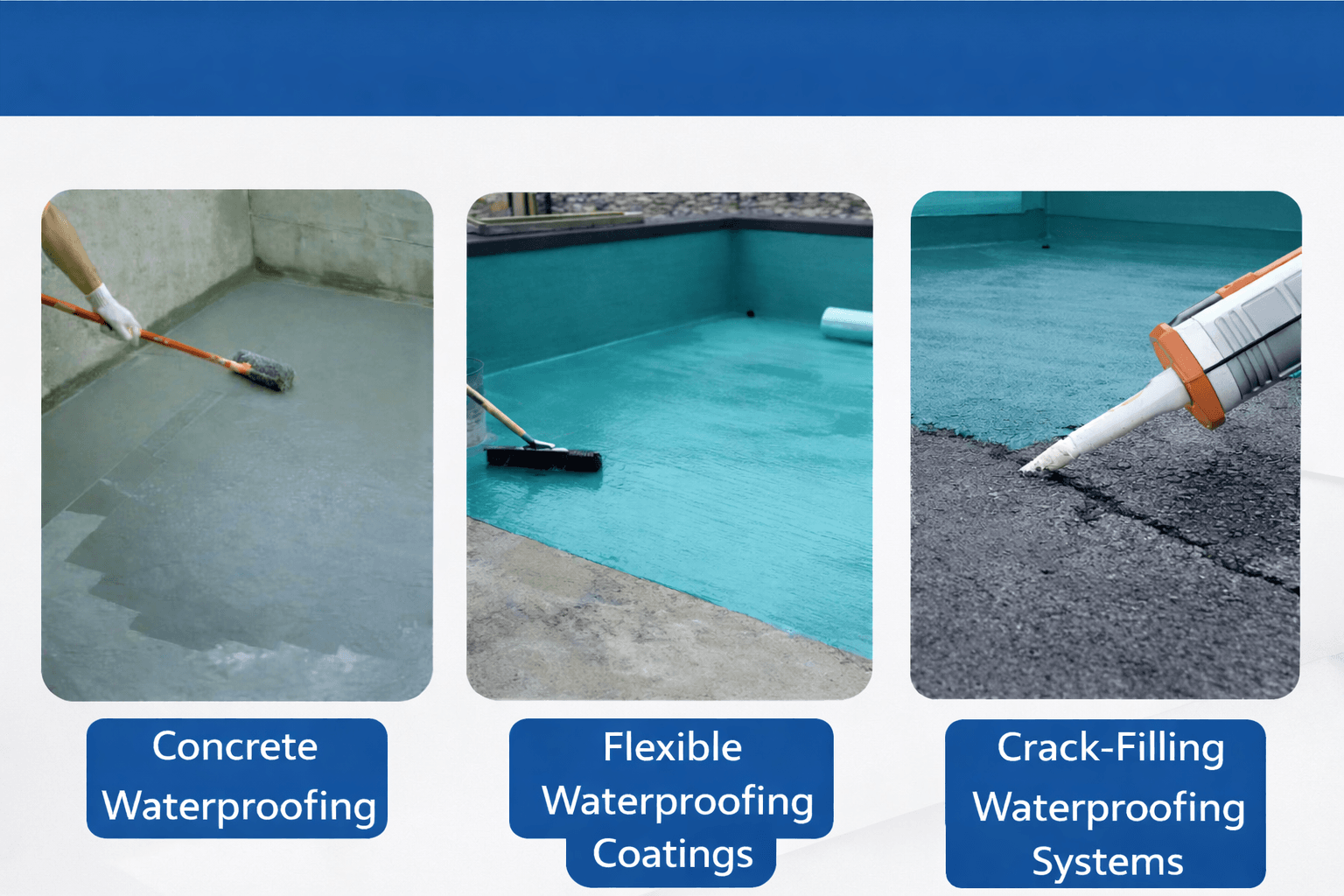
Types of Roof Waterproofing Treatments
Different roofs require different waterproofing solutions. Some of the most commonly used treatments include:
Traditional Bituminous Coating
This method uses bitumen-based materials to form a thick, water-resistant layer. It is commonly used on flat roofs and terraces and offers reliable protection against water seepage.
Heat-Reflective Waterproofing
Designed to repel water and reflect sunlight, these coatings reduce heat absorption while preventing leaks. They are ideal for sloped roofs and terraces exposed to intense sunlight.
Concrete-Mix Waterproofing
In this method, waterproofing compounds are mixed with cement and applied to concrete roofs. It is a cost-effective solution that strengthens concrete while improving water resistance.
Flexible Waterproofing Coatings
These elastic coatings expand and contract with temperature changes, making them suitable for flat roofs and terraces exposed to varying weather conditions.
Crack-Filling Waterproofing Systems
These systems are designed to seal hairline cracks and small surface gaps. Their flexible nature allows them to adapt to structural movement, ensuring consistent protection.
Benefits of Proper Roof Waterproofing
Effective roof waterproofing offers several long-term advantages:
- Extends the lifespan of the roof by preventing water damage
- Enhances property value with a leak-free structure
- Improves indoor comfort by reducing heat absorption
- Prevents mould, mildew, and related health issues
- Minimizes future repair and maintenance costs
Common Causes of Roof Leaks and Dampness
Roof leakage often occurs due to:
- Poor installation of roofing or waterproofing materials
- Exposure to extreme weather conditions
- Ageing or deteriorating roof surfaces
- Lack of routine inspection and maintenance
Identifying these issues early helps avoid extensive damage.
Roof Waterproofing Solutions by Waterproofers
Waterproofers delivers advanced roof waterproofing solutions tailored to different roofing conditions and structural needs. Our products are designed to prevent leakage, enhance surface durability, and ensure long-term performance.
- Precision-engineered crack fillers and sealants to block water entry points
- Durable waterproof coatings for terraces and roof surfaces
- Advanced waterproofing compounds that improve adhesion and reinforce concrete and plaster
All solutions are tested to withstand extreme weather, offering dependable, long-term protection for residential and commercial roofs.
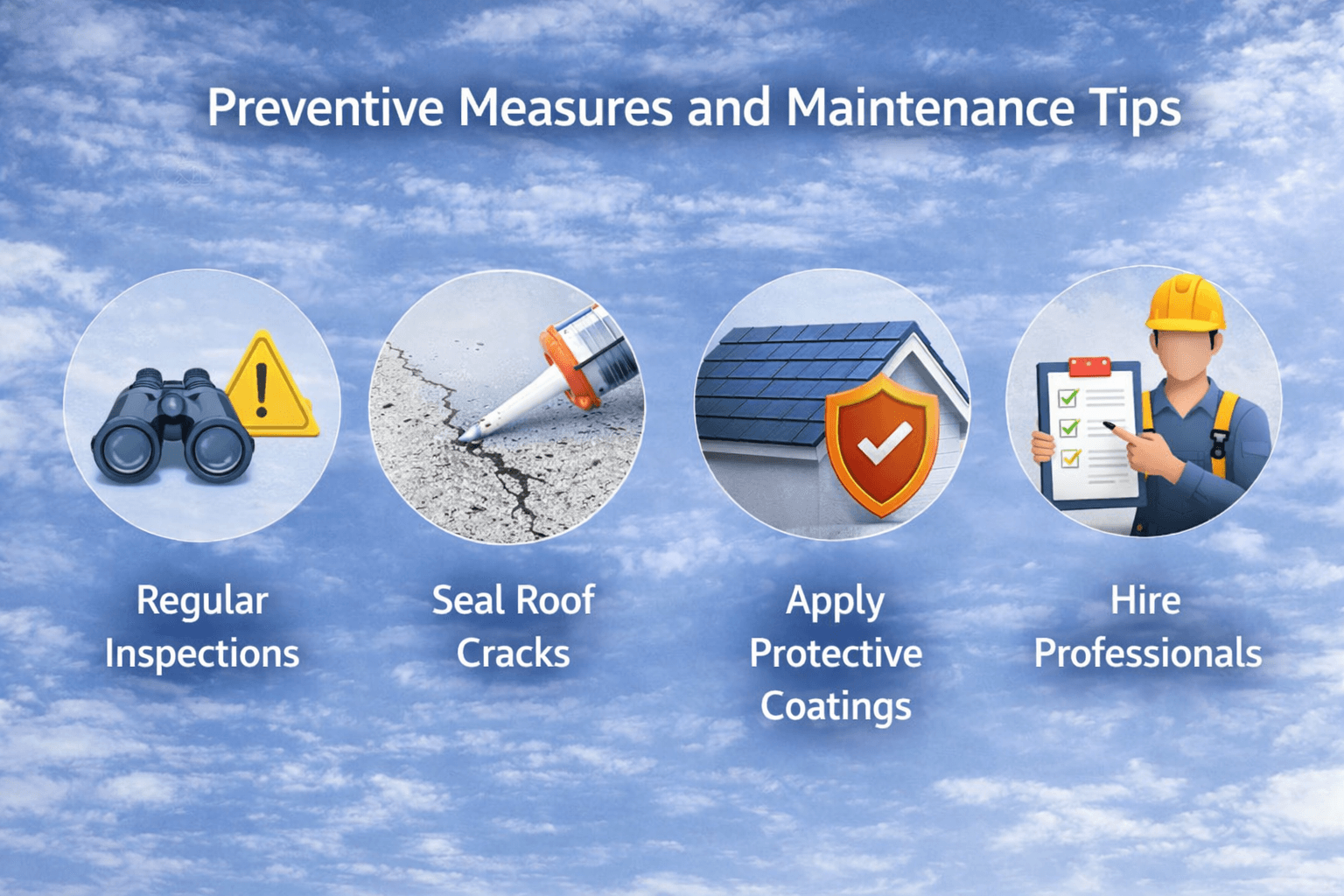
Preventive Measures and Maintenance Tips
To ensure lasting waterproofing results:
- Inspect your roof regularly for cracks and pooling water
- Clean debris from rooftops and drainage outlets
- Maintain gutters and downpipes for smooth water flow
- Seek professional help for ageing roofs or persistent leaks
Preventive maintenance significantly extends the effectiveness of waterproofing treatments.
Conclusion: Protect Your Roof’s Future with Waterproofers
Roof waterproofing is a vital step in preserving the strength and safety of your home. Unchecked moisture can slowly damage structures, increase repair costs, and affect indoor comfort. Investing in the right waterproofing solution today ensures long-term protection and peace of mind.
Waterproofers provides reliable roof and terrace waterproofing solutions engineered to perform in all weather conditions. From sealing cracks to reinforcing concrete surfaces, our solutions help keep your roof dry, durable, and secure. Don’t wait for leaks to worsen connect with Waterproofers and take the first step toward lasting roof protection.
Frequently Asked Questions (FAQs)
1. What are the basic steps involved in roof waterproofing?
Roof waterproofing typically starts with cleaning the roof surface and removing dust, debris, or loose material. Cracks and damaged areas are then repaired, followed by the application of a primer. A waterproof coating is applied next, and a protective topcoat is added to ensure long-lasting resistance against water and weather.
2. How long does terrace waterproofing usually last?
Terrace waterproofing generally lasts between 5 to 10 years, depending on the quality of waterproofing materials used, weather exposure, and regular maintenance. Periodic inspections and timely repairs can significantly extend its lifespan.
3. What is the average cost of roof or terrace waterproofing?
The cost of roof waterproofing is usually around 1% of the total construction cost. This is a cost-effective investment that helps avoid expensive structural repairs caused by water leakage and dampness in the future.
4. Why is roof waterproofing important for concrete roofs?
Concrete roofs are porous and can absorb water over time, leading to cracks, dampness, and structural weakening. Roof waterproofing for concrete surfaces prevents water penetration, enhances durability, and protects the building from long-term damage.
5. What are the common signs that a roof needs waterproofing?
Common signs include water stains on ceilings, peeling paint, damp patches, mould growth, cracks on the roof surface, and water pooling after rainfall. These indicate the need for immediate roof waterproofing treatment.